An “Outdoor” Financial Literacy Education

Financial literacy is something we can benefit from at all stages of life. From saving for a college education to getting by in retirement, many people today are feeling extreme financial anxiety and are looking for answers. Unfortunately, many Americans are unfamiliar with even the most basic economic concepts needed to make saving and investment decisions. In fact, research shows that more than half would fail a basic finance quiz. This lack of financial knowledge presents serious barriers in home purchases, retirement planning, and other financial choices. A well-informed consumer is critical to a strong and stable economy. While there are no guarantees or one-size-fits-all solutions to every monetary situation, knowing a few fundamentals could do wonders for your finances and your peace of mind. I hope my essay show you the importance of financial literacy and my solution for the financial illiterate crisis that is happened in American right now.
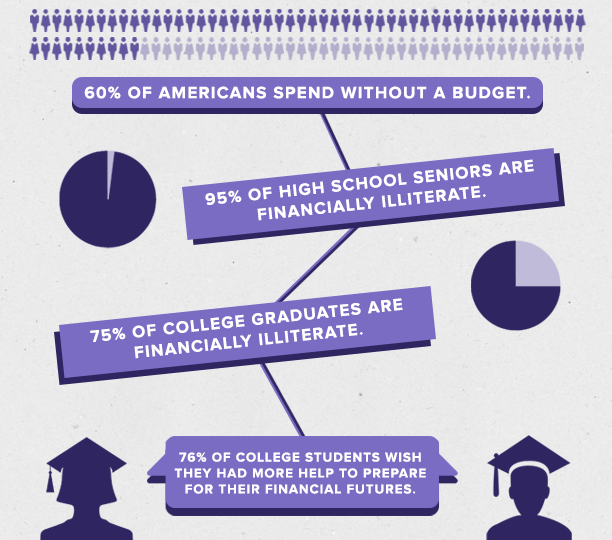
“Financial illiterate rate.” DoughMain Financial Literacy Foundation,
https://dmfinancialliteracy.org/index.php/financial-literacy/what-is-financial-literacy. Accessed 02 May 2019.

Most people know how to open a credit card account, how to deposit money into their accounts, and how to use their credit cards, but how many people really know what terms like APR mean, what banks do with the deposited money, how Social Security works, or the difference between a 401k and a Roth IRA? Financial skills are one of the most important skills that everyone should have and master. From understanding special terms on the bills to how different type of loans work to understanding the income taxes, and insurances, everything nowadays requires one to have basic financial skills, but our education curriculum tends to overlook this and many parents do not have the time to teach their children to deal with their money issues. The result is the big amount of debt that Americans incurred, especially students who were not taught to manage their loans. We spend most of our time investing in finding our perfect jobs, but we are not taught to manage the money we make from the job. Our education system needs to make financial courses more accessible and encourage people to take it in order to prevent detrimental financial decisions that could ruin a person’s life and prevent an upcoming financial crisis. More accessibility and variability to the courses would result in a generally better economy.

Without the financial knowledge, it is easier to make bad decisions that could potentially have a big impact on our life and we become more susceptible to frauds and scams. If financial classes are not available for everyone, individuals are missing the foundation to be able to make better decisions and maximize their successes. There are many problems an adult might face that requires them to know more than just basic math. An adult could face many financial decisions that have tremendous impacts on their later lives. First off, they will face their student loans, then they will have to borrow money for their first house, or first car. They will also need to understand different types of insurance throughout their lives. According to a study from Texas Tech, they found out that people make bad savings decisions because “they are financially illiterate, not because the information provided them is too complex” (Satter and Marwitz). In simple words, people keep making poor decisions on simple things that are easily prevented if they were more informed. An uninformed person is also an easier target of plenty types of scam and fraud. Nowadays, with online transactions, purchases increase significantly along with more advanced type of scams and frauds. According to Cairine Wilson, a vice-president of corporate citizenship at CPA Canada, she claimed that over 33,016 complaints from marketing fraud with more than $43.5 million in losses because the citizens did not have the knowledge to deal with such frauds. The mass loss occurred because the majority of the population was financially illiterate and were unable to deal with this new type of fraud. Although teenagers might claim this is not a problem because such frauds are obvious and hard to scam anyone, really they miss that there are many light-hearted and credulous people that would become an easy target to these frauds. Overall, with limited financial knowledge, one is more vulnerable to be scammed and easier to make bad decisions for their financial lives; additionally, a low financial knowledge population would heavily affect the country’s economy.
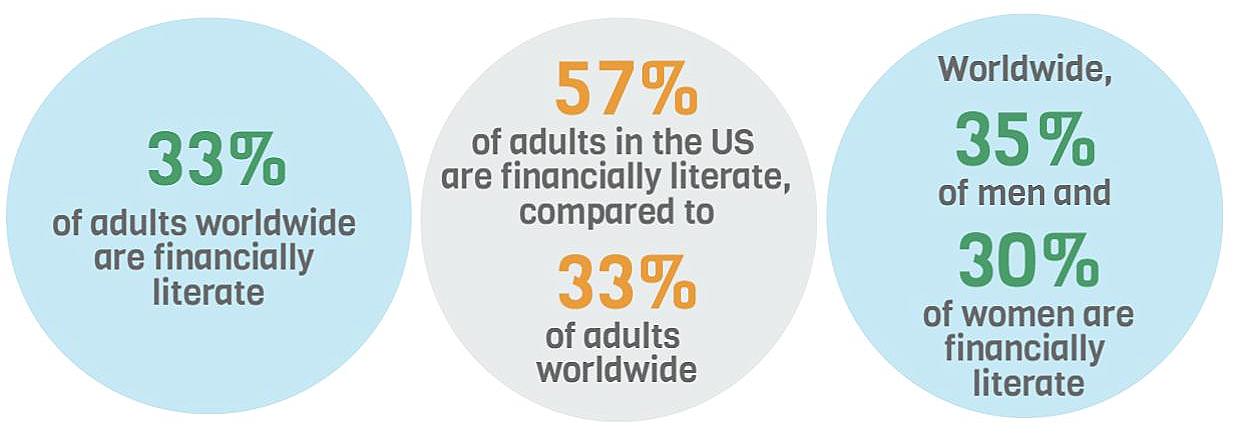
“Financial literacy rate world wide.” GFLEC,
https://gflec.org/initiatives/sp-global-finlit-survey/. Accessed 02 May 2019.

Financial illiteracy contributes to a bad economy that could easily lead to a financial crisis and would also affect a person’s happiness in life. When the majority of the citizens are uneducated about financial matters, it worsens the economy and leads to a financial crisis. Without the basic financial knowledge, we make terrible decisions and accumulate more and more debt; thus, financial illiteracy affects the allocation of financial resources and financial stability at both the micro and macro levels. According to Klapper, the 2008 financial crisis that resulted in significant losses for the economy was contributed by financial behaviors. The people’s lack of knowledge about their loans, debts, and the stock market that has an enormous effect on the economy. They took out loans without knowing how the loan works, they put money in stocks and trust funds without researching about the markets; moreover, such bad decisions from the lack of knowledge have increased their debts significantly and effect the country’s economy on different levels. The lack of knowledge about money issues might also lead to an unhappy and stressful life. We would miss out great opportunities in our lives and would always feel stressed out when we cannot understand and control our personal finances. According to Nate Geraci, the president of an investment advisory firm in Kansas City, 72% of Americans reported feeling stressed out about money matters and 28% feel depressed from financial anxiety monthly. Americans stress about money since they do not have enough knowledge on the subject; thus, they have health issues from extreme stress and easily lead to an unhappy life. Although the poorest or the wealthiest class tend to say, “Money can’t buy happiness,” really they miss that money solves most of the problems in lives and lets us have a more stress-free time. People use this as an excuse for their inability to get out of poverty. Overall, a financially illiterate population would easily lead to a financial crisis and an unsatisfied life; additionally, more accessibility and variability to financial courses could solve the root of the problems.
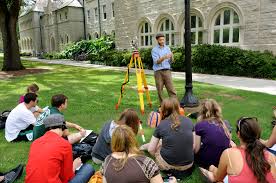
“Outdoor Class.”
https://commons.wikimedia.org/wiki/File:Outdoor_Classes_(3944501231).jpg . Accessed 02 May 2019.

With various and easy access to financial courses, it will reduce financial illiteracy by helping the majority of the population, especially the low-income class, improve their financial well-being and also reduce the gap between the rich and the poor. Making the courses more accessible would help the low-income class to fight back financial illiteracy. Low earners usually do not have the money to access to such courses; thus, they are lacking knowledge to control their hard-earned money. According to Dr. Liezel Alsemgeest, a lecturer for the University of the Free State, the students who have taken some financial literacy education tend to have a more effective financial behaviors that could lead to better decision making. Financial education could help us fight back the financial illiteracy crisis in the lower-income class who are suffering from the lack of knowledge. More variability and accessibility to financial education also help reduce the gap between the rich and the poor; thus, it helps generate a better economy. Low income is not the reason why most people stay poor; it is because of their bad financial behaviors and terrible decision making. According to Niall Ferguson, senior research fellow in Oxford, the rich get richer by having the best education from elite schools, while the poor only get a high school diploma. Not having equal education, the low-income class face more trouble in their lives and lose money on unnecessary things, so they keep remaining poor and cannot escape from it. Educating the youth by offering free and various financial classes would improve one’s financial well-being and narrow the gap between the rich and the poor.

Despite these benefits, educators may protest that financial classes are a waste of time because they do not stick, and they offer no real result. They believe that this might be a problem because traditional financial education is boring and most of the time are irrelevant to the student’s lives. According to an analysis of Lynch, Fernandes and Netemeyer, almost everyone who has taken a financial literacy class retained nothing (Mike Dang). Students easily forget boring and unrelated coursework. However, they overlook the fact that the information that we learn is the foundation for better thinking and decision making. They may also argue that financial courses have no significant result. According to Alison O’Connel, a therapist with eleven years of experience, financial literacy education would not make any noticeable difference in our behaviors. She believes this because she cannot connect the information that they learn with real life situations. Although this may be a problem at first glance, she miss that a new approach away from the traditional textbook will be more helpful because it is more feasible and practical. Overall, offering free voluntary classes with an “outdoor” approach is the best plan because it helps us retain more information and connect us with real life situation.

Therefore, we must open and promote “outdoor” financial clubs and groups. First, we need to ask for volunteers and donations to establish new clubs, groups and competitions to attract students. Then, we need to find voluntary teachers so that the course would be available to everyone for free. Competition with prizes would capture attention from students. Second, we need to establish a more practical method to help the learning become more effective. Instead of learning from a textbook and doing homework, we could have students deal with a real-life situation about insurance, bills, debts and loans to figure out the best solution in each situation. Practical methods like this would certainly retain longer in student’s memory, it would be more helpful in real life issue than learning about financial terms.

Due to continued frauds and bad decision making, we should educate our young generation because it is the foundation for a better life with better informed decisions by offering a free class with the new “outdoor” method. The gap between the rich and the poor is widening because of the lack of knowledge in the lower class. Scams and frauds happen every day and result in massive losses to uninformed workers. Financial illiteracy could lead to owning large amounts of debt, making poor decisions, becoming victims of predatory lending and resulting in bad credit. We need to promote financial literacy education by showing their indisputable benefits and making it more accessible for all classes. Despite it seeming ineffective at first, despite it being difficult, despite it being worthless and a waste of time, financial education improves one’s financial well-being, and it becomes the foundation for informed decisions: make financial education available to everyone.
Live for Now or Save for Later

When I started to earn and spend my first few dollars, I had the urge to learn more about savings because I could understand the hard work that I need to go through to earn them. My parents are always too busy to teach me the basics of my financial life, so I did all the research on my own. While I was doing the research, I noticed that many young millennial and even adults do not have any savings for their retirement. At first, I did not see this as something I should care much about when I am still in school, but after I realized the benefits of saving for retirements, I want to share my views on the matter and hope that everyone would also realize the benefits of saving for retirements at an early age.

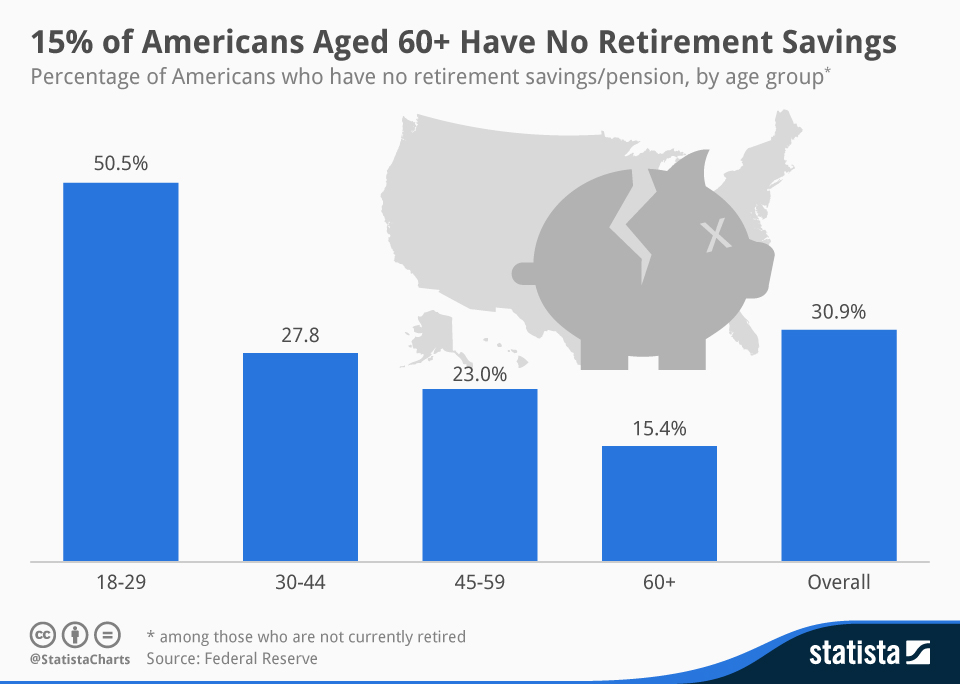
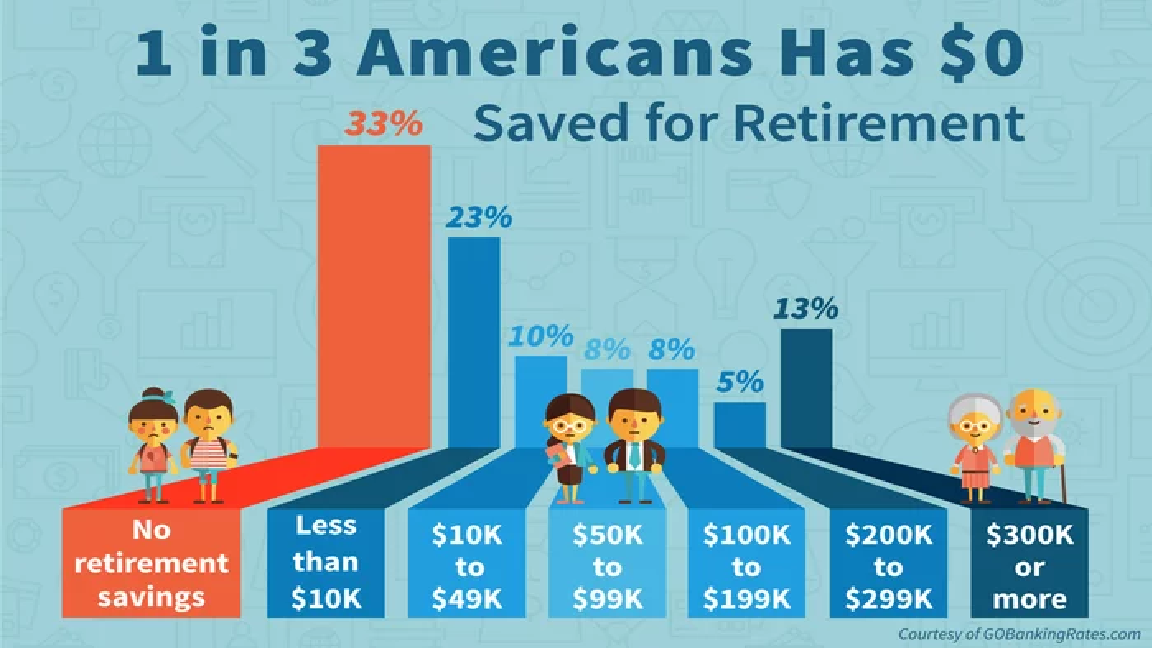
According to Matthew Frankel, an investment specialist with a graduation certificate in financial planning, Social Security is estimated to replace only 40% of our income. In 2034, the Social Security’s fund will be depleted, but it is currently responsible for 27 million people to stay off the poverty line with one-third of Americans have absolutely nothing saved for retirement (Frankel). Even though the importance of saving for retirement is certainly indisputable, Americans ignore the benefit of their retirement saving. A retiree will depend on Social Security’s money to survive, but it is shown that Social Security alone will not provide enough for an elder’s need; therefore, having a retirement account is crucial. Even though there are many benefits of saving for retirement, many millennial rarely think about retirement with various reasons such as having low incomes or rather spending on the goods now with the hope that their future would sort themselves out. The reality is that lots of elders have to re-enter the workforce after their retirement because they cannot afford to pay their bills. Planning and saving in a retirement account as early as possible would be helpful because Social Security is not as reliable anymore, parents do not want to become financial and emotional stresses to their family, and saving accounts are usually tax-deferred which could help reducing tax money.

McCarthy, Niall. ” 15% of Americans Aged 60+ Have No Retirement Savings.” Statista,
https://www.statista.com/chart/2561/americans-with-no-retirement-savings/. Accessed 07 April 2019.

Having Social Security as the only source of income after retirement would alter the current lifestyle and usually result in a significant amount of debt. According to Jon Gorey, a multiple-award winner from the National Association of Real Estate Editors, 61.3 % of households that are headed by adults aged sixty or more have an average debt of 40,000 dollars. Social Security’s funds are usually not even enough for mandatory bills and food which makes people adjust their lifestyle in order to be able to pay their bills. Moving to retirement is a really difficult transition that most people find hard to adapt because it usually results in a giant debt for them that make many people reenters the workforce. According to Frankel, in 2018, a retired couple who retires at age sixty-five can expect to pay around $280,000 out-of-pocket for healthcare costs during their retirements. As their age increases, their immunizations decrease significantly. The same flu could have no serious impact on a young, healthy adult, but it could put an elderly person into a deadly position. While some may argue that Medicare would pay for most of the medical expenses, there are lots of medical expenses that Medicare does not cover. Medicare does not pay for serious, long-term treatment and a lot of different services, so it is always better to prepare to save for medical expenses. Ultimately, Social Security may not be reliable and enough for everyone because it alters people’s lifestyle and unexpected costs would result in debts; furthermore, saving for retirement early would prevent the parents from becoming a burden to the children. 

Without saving for retirement, most elders will easily drive up their debts and bring stress to their children or spouses with unpaid bills. Cameron Huddlestone, an award-winning journalist with fourteen years of experience as the chief editor, claims that low-income parents will be more likely to move in with their children. According to Frankel, half of Americans cannot handle a $400 unexpected fee without selling personal items or borrowing money. As low-income parents retire without any savings, they have to move in with their children, so that their children would help them to pay off bills and unexpected costs. The parents now become a financial burden to their children who now might not have enough to save money for their own retirement. According to Jeffrey Dew, who has a double title in PhD-HFDS and Demography about family studies, couples with no actual savings and a high level of debt report a higher level of anxiety, while couples with a financial plan for retirement report greater health over time. Couples with no planning for retirement usually also do not have a good strategy for savings. Without any savings, couples often accumulate lots of debts from unexpected costs and bills which exert a great deal of stress on them. On the other hand, having a retirement account could lead to a stronger body and healthy mind over time because it provides a secured feeling for the future that could reduce a lot of stress which is connected to life-threatening illnesses like heart attack, kidney diseases, and cancer. While young people may argue that it is their duty to pay the bills and take care of their parents when they retire, most parents do not want troubles to their kids. All parents want to see their children thrive and be successful in life. No one would ever want to be in an awkward and stressful situation with their children figuring out how to pay their bills. Overall, planning for retirement could keep elders from becoming too dependent on their family, and it could also protect marriage relationships; furthermore, a retirement account is usually eligible for tax deduction.

In addition, opening a retirement account could result in reducing income-deductible tax and having incredible health insurance benefits. According to Paula Thielen, a physician about family medicine, a traditional individual retirement account allows taxpayers to set aside tax-free money for retirement while offering tax advantages. The traditional individual retirement account deducts a desired amount from the payroll to the portfolio before any taxes which would reduce the taxable income. The investment, then, would stay tax-free and grow exponentially until withdrawal. The longer the money stays in the portfolio, the less percentage of the profits would be taxed upon distribution. Another type of retirement account that offers great health cost benefit is the health saving accounts (HSAs). According to Tacchino, a professor of taxation and financial planning at Widener University, HSA is the most effective way to save for retirement and also pay for retirement medical expenses because of its abilities to make before-tax contributions with exponentially tax-free growth, and tax-free distributions. HSA has plenty of benefits that exceed a normal retirement account. Even though it has the same benefits of tax-free contribution like a traditional saving account, it also offers tax-free withdrawal for any current or future medical expense which a traditional retirement account does not have. Lots of people use this account to pay less for their medical expenses because there is no penalty for early withdrawal. While low-income families may argue that they are living paycheck to paycheck and have no money to save for retirement, there are plenty of ways to cut spending of all unnecessary costs and lower their bills. How do they expect to live and save later in their life if they could not even save when they were younger and at the peak of their lives? Ultimately, having a retirement account could result in a lot of hidden benefits from tax and healthcare insurance costs.

Kirkham, Ellysa. “1 in 3 Americans Has Saved $0 for Retirement.” Money,
http://money.com/money/4258451/retirement-savings-survey/. Accessed 07 April 2019.

Saving for retirement early could prevent many problems because of the insufficient funds from Social Security for a normal lifestyle, a good relationship with their family and the tax benefits for a retirement account. The growing rate of people with no savings for their retirement account has become a serious issue in America due to ignorance and the YOLO culture from the young generation which encourages living life to the fullest extent and pays little attention to the future. An ongoing debate about spending all and living for now or saving for the future results in no real winner since both lifestyles have their own charms and ugliness. While life is all about spending money on materials and fun experiences, the consequences of not saving and planning are serious that cannot be ignored. Saving all the time, saving in spite of hardship, saving however long and hard, the retirement maybe; for without saving there is no future.

Work Cited

Dew, Jeffrey P. “Family Finances.” The Wiley Blackwell Encyclopedia of Family Studies, edited by Constance L. Shehan, 2016. Credo Reference, search.credoreference.com/content/entry/wileyfamily/family_finances/0. Accessed 16 Mar. 2019.

Frankel, Matthew. “40 Sad Facts About Retirement.” The Motley Fool, 23 May 2018, www.fool.com/slideshow/40-sad-facts-about-retirement/?slide=34. Accessed 07 Mar. 2019.

Gorey, Jon. “Two-Sided Coin: Save for the Future or Live for Today?” The Simple Dollar, 27 Feb. 2018, http://www.thesimpledollar.com/save-for-the-future-or-live-for-today/. Accessed 07 Mar. 2019.

Huddleston, Cameron. “63% Of Kids Plan to Financially Support Parents’ Retirement.” GOBankingRates, 7 July 2017, www.gobankingrates.com/retirement/planning/kids-plan-financially-support-parents-retirement/. Accessed 07 Mar. 2019.

Tacchino, Kenn Beam. “The Health Savings Account Strategy.” Journal of Financial Service Professionals, vol. 71, no. 3, May 2017, pp. 7–10. EBSCOhost, search.ebscohost.com/login.aspx?direct=true&db=bth&AN=122751697&site=ehost-live. Accessed 07 Mar. 2019.

Thielen, Paula J. “Individual Retirement Accounts (IRAs).” Encyclopedia of Business Ethics and Society, Robert W. Kolb, 1st edition, Sage Publication, 2008. Credo Reference, search.credoreference.com/content/topic/individual_retirement_accounts. Accessed 07 Mar. 2019.

The Internet Prevents a Crisis in the United States

As a Finance major student, I spend a lot of times looking for ways to improve my financial skills. I have always been fascinated in the world of finance and how it functions. I was very excited when I first learned about finance as it is such a fantastic subject and I also found out a speech that share a lot of my thoughts. The speech helps me to understand the necessity of becoming more informed about finance and it also shows me how to use the Internet to find reliable information. I learned a lot of important information upon writing this essay, so I want to share all my thoughts with you about this great speech. Hopefully, my essay would help you to see the author’s strategies in the speech and how he was able to deliver one of the best speeches at the time.

https://www.sec.gov/news/speech/speecharchive/1999/spch269.htm

In 1998, the U.S. Securities and Exchange Commission (SEC) – a government agency that informs and protects investors from illegal transactions and frauds – launched an ongoing, educational campaign called Facts on Saving and Investing Campaign in order to encourage individuals to learn about wise saving and investing. Arthur Levitt, who was the longest serving Chairman of the SEC, dedicated his life to educating and protecting American investors. In 1999, one year after the establishment of the campaign and partnerships with multiple media, Levitt spoke at the Media Studies Center in New York to media school students and important SEC commission members to demonstrate a successful campaign and his gratefulness towards the media’s help. In the excerpt from his speech at the Media Center in New York, Arthur Levitt uses a serious yet objective tone, along with solid statistics and feasible solutions, in order to encourage people to join and spread his campaign to help people understand the necessity of becoming financially literate to control one’s personal financial life.


Chairman of the SEC
Arthur Levitt

At the beginning of his speech, Arthur Levitt introduces the crisis of financially illiterate Americans in order to illustrate the severity of the problem that millions of American lives paycheck to paycheck. He begins his speech stating that we are in the “midst of a financial literacy crisis” and using the repetitive phrase “many people.” This repetitive phrase demonstrates the lack of knowledge and information about financial stability among the majority of Americans. Levitt uses bold and repetitive phrases to develop a fear of missing out among the audience; therefore, he encourages the audience to learn and research more. After establishing the problem, Levitt justifies the financial literacy crisis with detailed evidence. He states that “sixty-five million American households” fail to reach their major life goals simply because they have not developed a comprehensive financial plan. This enormous number demonstrates the need for all Americans to, at least, create a basic plan for their major goals in life. Levitt uses real-life circumstances in order to connect the audience to the crisis; thus, he urges the audience to become more informed.  Levitt also mentions one of the main reasons for this problem is the abundant amount of information on the internet. He states that with a pace of ten websites a day, one could spend “two and a half years” to explore all the finance topics. The long period of time illustrates the glut of information in the Information Era as one would struggle to differentiate between scams and false articles from helpful websites. The use of a hyperbole targets the struggle of finding useful and correct information; therefore, it shows the author’s understanding on the struggle that everyone face in order to strengthen his authority and build up more credibility. Ultimately, Levitt uses strong data and logical arguments to clearly provide the context for the financial literacy crisis and establish the cause of this problem and the struggle in the fight against being financially illiterate; furthermore, Levitt explains how the internet could become a viable solution if it is used properly.

Desroches, David. ” College Gives Connecticut An ‘F’ Rating For Financial Literacy.” Connecticut Public Radio, 18 December 2017, https://www.wnpr.org/post/college-gives-connecticut-f-rating-financial-literacy. Photograph.

In addition, Levitt describes how to use media to resolve the financial problem and provide a strong result from using the internet in order to assert the effectiveness of the media in helping people control their financial personal life. He begins his speech by confirming the power of the media. He claims that smoking in middle school saw a significant drop of “twenty percent in one year” after an aggressive media campaign that promotes anti-smoking. The real-life situation illustrates the capability of the media influence to this generation. The strong result also enhances the credibility of Levitt to his audience. He gives useful tips to his initial audience that he wants the stories and lessons about financial stability to “jump” to the front page, and the media needs to “spotlight” these stories for the readers in their newsfeed. These words indicate the urgency for these stories to be seen by everyone, and then he establishes a duty and responsibility for his primary audience at the Media Center. He also put out a simplified plan to help with making a well-informed investment decision which contains three main steps. First, one need to find out a suitable “investment goals,” commitment time, and risk tolerance. He clearly explains the solutions step by step. His plan becomes more effective and trustworthy to the audience with the use of the logical method in his solution. Ultimately, Levitt analyzes his solution and gives realistic examples in order to prove his solutions are feasible and functional; additionally, Levitt finally describes his successful campaign in order to recruit more people to join the campaign.

At the end of his speech, Levitt demonstrates extraordinary results of the campaign in order to stimulate an action in the audience to join the campaign. After explaining to his audience how the media, in proper use, could become such a powerful tool, Levitt introduces his campaign and urges people to promote it. He uses detailed information to explain the achievement of his campaign with the media’s help. Some of his successful programs in the campaign such as “Ballpark Estimate” which helps calculate the amount of money needed for their goals or retirement or a “Mutual Fund Cost Calculator” to see how the mutual fund could add up over time. Detailed results from his campaign demonstrate the successfulness of his campaign and set these websites apart from the scam and fraud websites. The strong result also asserts the belief of the audience for the success of this campaign. Remarkable words such as “vital,” “defining,” and “democratization” are used towards the end of the speech to demonstrate that the world is quickly changing, and important moment requires strong actions from everyone. These intellectual words make the audience feel like they are in the moment that will soon become historic and make them to adopt changes and new things. In those very last sentences of the speech, Levitt uses lots of call-to-action phrases and words. He describes this moment as a unique opportunity which could be lost out due to ignorance, and he suggests the headline to be “Get the facts. It’s your money. It’s your future.” Levitt creates an astounding headline and takes the first step into the change and lets the media decide the future of our country, thus, urging them to join with him in the campaign and follow his suggestions.  Ultimately, Levitt uses detailed information and influential information in order to describe the results of the campaign and give a final push to the audience to join his investing campaign.

In his speech at the Media Studies Center, Levitt uses a momentous yet informative tone, along with strong evidence and practical solutions, in order to encourage people to join his campaign and help decrease poverty due to a lack of knowledge. The author uses well-researched data and realistic situations along with clear analysis to deliver a successful speech and achieve his purpose of recruiting more people to join the campaign. Levitt wants everyone to overcome fear of money-related problems and become well-informed in order to make good decisions for one’s personal finance condition. The illiterate crisis and the problem and the consequence has frightened the audience, but there is something in his speech that comforts and relieves the audience. This speech creates complete reform of how the news categorizing their news-feed as personal finance and economy usually become its own category. Levitt’s ability to convey complex information in layman’s terms is one of the reasons he becomes one of the most respected speakers about finance. This speech would help the audience to see the necessary of learning more about one’s personal finance and to also help influence other to stay informed.

Levitt, Arthur. “Speech by SEC Chairman: Financial Literacy and Role of the Media.” U.S. Securities and Exchange Mission, 26 Apr. 1999, www.sec.gov/news/speech/speecharchive/1999/spch269.htm. Accessed 07 Feb. 2019.